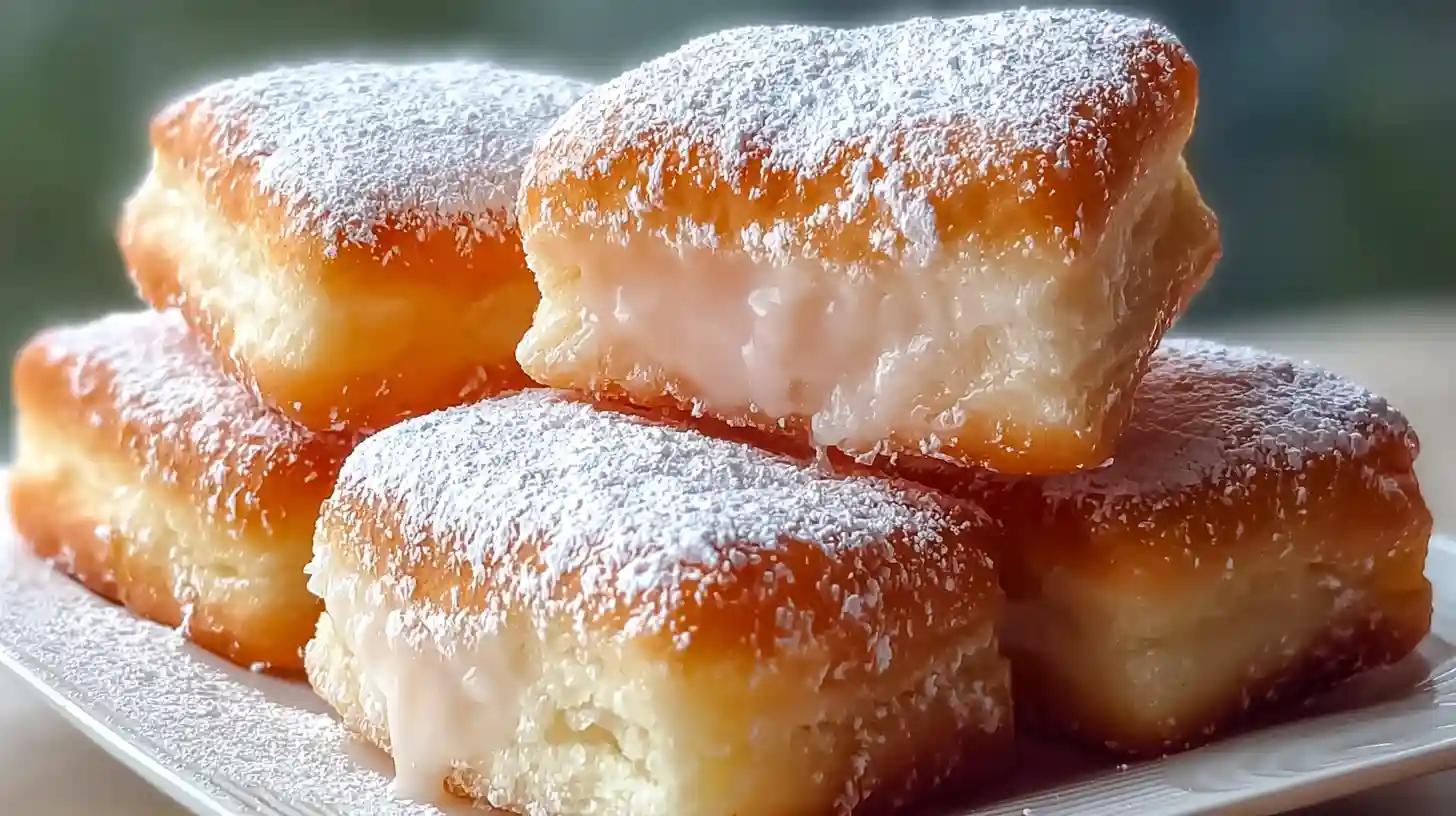
Buttermilk beignet squares sit somewhere between a doughnut and a pillow. Light on the inside, just barely crisp on the outside, and coated in a simple glaze that sets as they cool. If you have been wondering what to make with buttermilk sitting in your fridge, this is a genuinely satisfying answer. The buttermilk beignet square dough comes together without anything complicated, and the frying goes faster than most people expect.
These are not the round beignets piped through a bag. The square shape is intentional – easier to cut, more even when frying, and honestly more satisfying to bite into. The glaze gives a thin crackly finish that holds even after they cool down.
Ingredients for the Buttermilk Beignet Square Dough and Glaze
- 2 1/4 teaspoons active dry yeast (1 standard packet)
- 1/4 cup warm water (around 110°F)
- 1 cup buttermilk, room temperature
- 1/4 cup granulated sugar
- 2 tablespoons unsalted butter, melted
- 1 large egg
- 1/2 teaspoon fine salt
- 3 1/2 cups all-purpose flour, plus more for dusting
- Neutral oil for frying (vegetable or canola), enough to fill pot 3 inches deep
- 2 cups powdered sugar (for glaze)
- 3 to 4 tablespoons whole milk or buttermilk (for glaze)
- 1/2 teaspoon vanilla extract (for glaze)
How to Make the Dough and Fry It Right
Start by proofing the yeast. Combine the warm water, yeast, and a pinch of the sugar in a small bowl. Let it sit for about 8 minutes. If it foams and smells yeasty, it is ready. If nothing happens, your yeast is likely old and the dough will not rise properly – start with a fresh packet. This is the most important step in any recipes with yeast baking, and skipping the proof check causes more failed batches than anything else.
In a large bowl, whisk together the buttermilk, melted butter, egg, sugar, and salt. Pour in the activated yeast mixture and stir to combine. Add the flour one cup at a time, mixing until a soft dough forms. It should be slightly tacky but not sticky enough to cling to clean hands. Turn it out onto a floured surface and knead for about 6 minutes until smooth and elastic. Place in a lightly oiled bowl, cover, and let rise for 1 hour or until doubled.
Once risen, punch the dough down and roll it out on a floured surface to about half an inch thick. Cut into 2-inch squares using a sharp knife or bench scraper. Let the cut squares rest on a floured tray for 20 minutes before frying. This short rest helps them puff more evenly in the oil.
Heat your frying oil to 360°F. Fry in small batches, 3 to 4 squares at a time, for about 90 seconds per side. They should be deep golden and slightly puffed. Transfer to a paper towel-lined rack. While they are still warm, dip or drizzle with the glaze made from powdered sugar, milk, and vanilla stirred until smooth.
Tips That Improve the Texture Every Time
Room temperature buttermilk matters more than it seems. Cold buttermilk slows the yeast activity and produces a denser crumb. Pull it from the fridge at least 30 minutes before you start. For baking with buttermilk recipes in general, this is a rule worth building into your routine. Also, resist the urge to add too much flour during kneading. A slightly soft dough fries up lighter than a stiff one every time.
Keep your oil temperature steady. Use a thermometer if you have one. Oil that drops below 340°F leads to greasy beignets that absorb too much fat. Oil that climbs above 375°F browns the outside before the inside cooks through. Between batches, give the oil 60 seconds to recover its temperature before adding the next round.
Substitutions That Work Without Changing the Result Much
No buttermilk on hand? Combine 1 cup of regular milk with 1 tablespoon of white vinegar or lemon juice, stir, and let it sit for 5 minutes. That works as a reliable stand-in and keeps the slight tang that makes these taste distinct. For a dairy-free version, oat milk with a splash of apple cider vinegar gets surprisingly close. These also qualify as baking recipes without milk when made with that swap. The glaze can be made with water instead of milk for a thinner, more translucent pastry glaze finish.
Variations Worth Trying on the Next Batch
The plain glaze is a solid starting point, but there is a lot of room to move from there. A cinnamon sugar coating instead of glaze gives a completely different texture and is easier to prep. For glazed beignets with more depth, add a teaspoon of espresso powder to the glaze mixture. Lemon zest in both the dough and the glaze works well for a brighter version. If you want something closer to the best beignet recipe style from New Orleans cafes, skip the glaze entirely and dust heavily with powdered sugar while still warm.
Storing Leftovers and Getting Them Back to Fresh
Beignets are always best within the first few hours. After that, the outside softens and the glaze loses its crackle. If you need to store them, keep them in a single layer in an airtight container at room temperature for up to 1 day. To refresh them, place on a baking sheet in a 300°F oven for 5 minutes. They will not be exactly like fresh, but the texture comes back noticeably. Do not refrigerate them as it accelerates the staling process and makes the interior gummy.
FAQ
Can I make the dough the night before?
Yes. After the first rise, punch the dough down, wrap it tightly in plastic wrap, and refrigerate overnight. The next day, let it come to room temperature for 30 minutes before rolling and cutting. Cold-proofed dough often has slightly better flavor from the slower fermentation.
Why did my beignets come out flat instead of puffy?
The most likely reason is under-proofed dough or yeast that did not activate properly. Always proof your yeast before mixing, and make sure the dough has visibly doubled before you roll it out. Skipping the 20-minute rest after cutting also reduces puffiness during frying.
Is there a way to bake these instead of frying?
Baking produces a different result, closer to a dinner roll than a beignet. The characteristic crisp outer layer only comes from hot oil. If you want to avoid frying, the recipe will still taste good baked at 375°F for 12 to 14 minutes, but the texture changes significantly.
What oil is best for frying beignets?
Any neutral oil with a high smoke point works well, including canola, vegetable, or refined coconut oil. Avoid olive oil or butter as both have lower smoke points and can add unwanted flavors at frying temperatures.
Can I use instant yeast instead of active dry yeast?
Yes. Use the same amount and skip the proofing step. Just mix the instant yeast directly into the flour. The rise time may be slightly shorter, so watch the dough rather than relying strictly on the clock. Recipes with yeast baking often work with either type as a direct swap.
Buttermilk Beignet Square
Ingredients
Equipment
Method
- Proof the yeast in warm water with a pinch of sugar for 8 minutes until foamy.
- Whisk buttermilk, melted butter, egg, sugar, and salt together in a large bowl, then stir in the yeast mixture.
- Add flour one cup at a time, mixing until a soft, slightly tacky dough forms.
- Knead on a floured surface for 6 minutes until smooth and elastic, then let rise in an oiled bowl for 1 hour until doubled.
- Roll dough to 1/2 inch thickness and cut into 2-inch squares. Rest on a floured tray for 20 minutes.
- Fry in batches at 360°F for 90 seconds per side until deep golden. Drain on a wire rack.
- Mix glaze ingredients until smooth and dip or drizzle over warm beignets. Allow to set for a few minutes before serving.
Notes
- Always proof yeast before mixing to avoid flat beignets.
- Use a thermometer to keep frying oil at a steady 360°F.
- Room temperature buttermilk produces a lighter, airier crumb.
- Best eaten within a few hours of frying.